
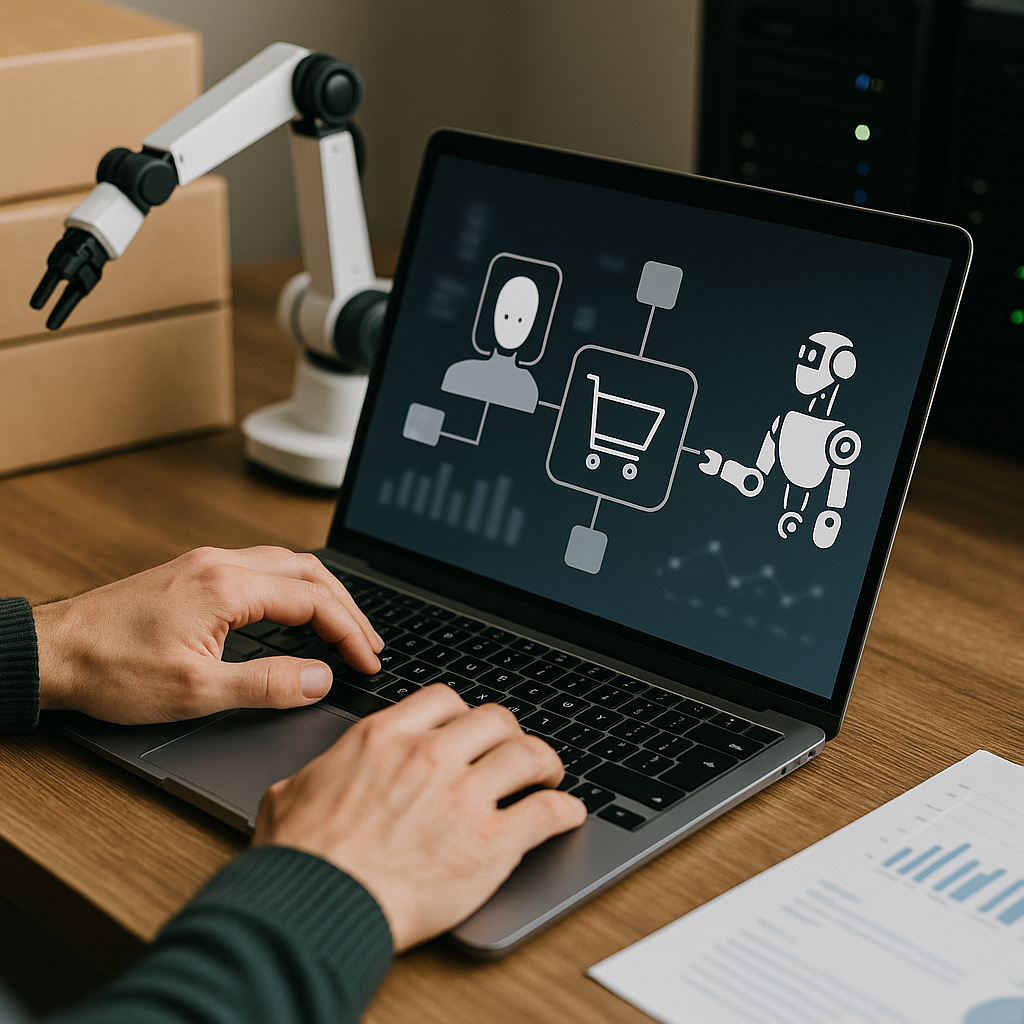
Recent advancements in AI and robotics are reshaping how digital and eCommerce businesses engage with customers. Realbotix, a leader in robotics, has partnered with FUTR to integrate sophisticated AI agents into physical robotic systems, enabling secure, real-world interactions that extend beyond typical screen-based experiences. This pilot initiative represents a significant step toward blending AI technology with tangible customer touchpoints—an important development for entrepreneurs and operators focused on expanding eCommerce opportunities.
Overview of the News
Realbotix Corp., known for its robotics innovation, recently announced a partnership with FUTR, a company specializing in AI agent platforms. The collaboration aims to fuse Realbotix’s physical robots with FUTR’s advanced AI agents to create interactive systems capable of real-world engagements beyond traditional digital channels. By integrating AI-driven conversational agents into physical robotic frameworks, this pilot project is poised to unlock new modes of secure, automated, and personalized interaction in environments ranging from retail spaces to service desks.
While specific application details remain limited due to subscription-only content from the initial press release, the strategic alignment of AI conversational technology with robotics signals progress in enabling more intuitive and automated customer experiences. It moves beyond screen-bound AI interactions, positioning AI agents as dynamic interfaces in tangible settings.
Why This Matters for eCommerce Opportunities
As someone actively building and deploying eCommerce systems, analytics pipelines, and automation workflows in real-world environments, I recognize that expanding customer engagement channels is critical for growth. Integrating AI agents through physical robotics introduces a novel touchpoint that can enhance user experience and build brand differentiation.
For eCommerce businesses, particularly those with physical retail components or hybrid models, this approach offers opportunities to merge online business automation with offline customer service. Robotics paired with AI can automate repetitive tasks such as product demonstrations, onboarding assistance, or transactional support, freeing human teams for more complex duties.
Moreover, the use of AI agents for business improves personalization at scale, fueling better conversion rates and customer retention. This aligns with ongoing efforts in website optimization and analytics and conversion tracking by providing additional data streams and customer behavior insights from physical interactions.
Impact on Digital Business Operators
Digital business operators running service-based or hybrid models stand to benefit from this integration on multiple fronts. First, it helps scale digital businesses by broadening the scope of automation beyond online interfaces into real-world contexts, potentially reducing labor costs and improving consistency in customer engagement.
Second, workflow automation powered by AI agents embedded in robotics can streamline processes that traditionally require manual intervention—such as check-ins, guided assistance, or promotional outreach—ultimately improving operational efficiency. These capabilities can reinforce omnichannel strategies where customers transition seamlessly between digital and physical touchpoints.
However, incorporating such systems involves evaluating trade-offs around upfront investment, technology reliability, data security, and customer acceptance. Operators must be prepared to implement robust analytics and conversion tracking to measure effectiveness and optimize ongoing deployments.
Where Automation and AI Fit In
The Realbotix and FUTR partnership epitomizes the increasing role of automation and AI in evolving eCommerce landscapes. AI agents are no longer confined to websites or mobile apps but are expanding into physical environments to augment human efforts and enrich customer interactions.
In practice, this means online business automation strategies can now incorporate AI-driven robotics to handle both digital and tangible workflows. From automating customer queries in retail locations to collecting real-time feedback, the convergence of AI agents with workflow automation can enhance scalability and accuracy.
By leveraging comprehensive analytics and conversion tracking, businesses can identify which automated interactions yield the highest ROI and refine their operational models accordingly. This layered approach creates a feedback loop essential for scaling digital businesses thoughtfully and sustainably.
If you’re evaluating eCommerce or automation opportunities, reach out here to discuss real-world use cases.
Practical Next Steps
- Assess your current customer interaction points and identify areas where AI agents integrated with robotics could add value, especially in hybrid or physical retail extensions of your eCommerce operations.
- Incorporate workflow automation planning that balances technology investment with expected operational gains and customer experience improvements.
- Establish or enhance analytics and conversion tracking frameworks capable of capturing data from both digital and physical customer engagements to evaluate the effectiveness of new AI-driven touchpoints.
- Remain cautious about security implications and data privacy when deploying AI agents in real-world settings, ensuring compliance and customer trust.
- Consider pilot testing AI-driven robotic systems in controlled environments before full-scale rollout to refine processes and minimize risks.
As with any emerging technology, thoughtful evaluation and deliberate implementation are key. This partnership highlights a promising evolution for eCommerce opportunities, but success depends on aligning new capabilities with business goals and operational realities.
Created by Gabe’s AI Assistant.